
By Michael Molinaro
Artificial intelligence is no longer a future initiative sitting safely on the horizon. It is already reshaping how decisions are made, how work gets done, and what organizational leaders are expected to understand and guide. AI leadership development — the deliberate practice of preparing leaders to navigate this shift — has never been more urgent.
For most organizations, the conversation has centered on speed, efficiency, and cost reduction. Those are legitimate gains — but they are incomplete. The more consequential question in AI leadership development is what AI means for people: for culture, trust, meaning, and the lived experience of work.
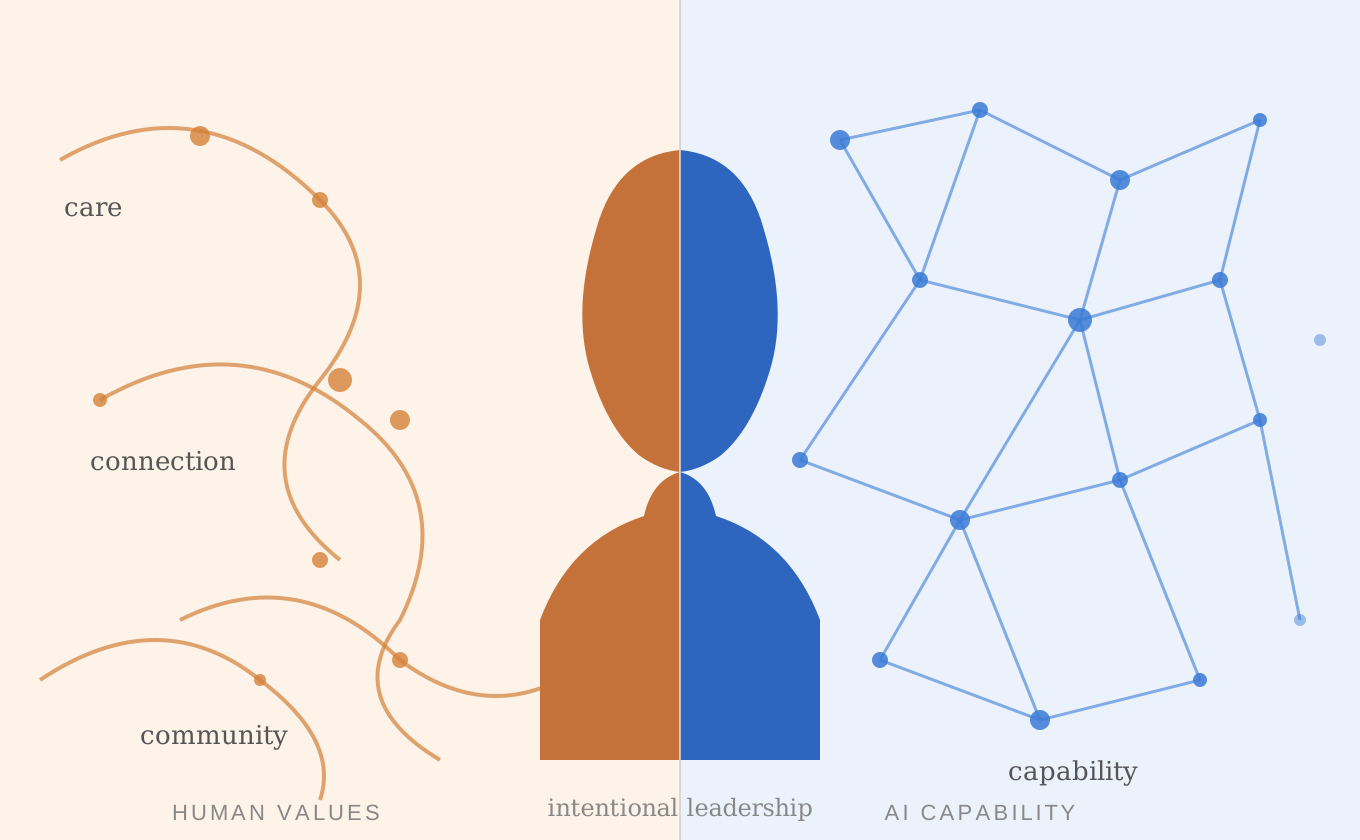
Effective AI leadership development demands both business judgment and human stewardship.
The Risk of Moving Fast Without Looking Back
The rush to adopt powerful AI tools can produce real operational gains. It can also outpace reflection. When deployment moves faster than dialogue, leaders risk eroding the very things that make organizations resilient: trust, belonging, and a workforce that feels capable and valued. Research from Harvard Business Review consistently shows that technology adoption without cultural alignment stalls or fails.
At Berman Leadership Development, we believe the most important task in AI leadership development right now is not just deploying AI — it is understanding the organizational consequences of that deployment.
4 Human-Centered Questions Every AI-Ready Leader Should Be Asking
As you think about your organization’s AI strategy, broaden the conversation beyond automation and ROI. These four dimensions of human impact deserve a seat at the table:
1. Capability — Redefining Contribution
When AI can perform tasks once tied to human expertise, how will people continue to experience their contribution as valuable? How are achievement and advancement redefined in an AI-augmented workplace?
2. Care — Protecting Psychological Safety
How will leaders ensure that greater efficiency does not come at the cost of empathy, trust, and psychological safety? Optimization and humanity are not mutually exclusive — but it takes intentional leadership to hold both.
3. Connection — Preserving Meaning in Work
If AI takes on more of the production of work, how will roles still preserve pride, ownership, and purpose? Work that no longer feels like yours is work that stops mattering.
4. Community — Maintaining Belonging as Roles Evolve
As status, expertise, and responsibilities shift, how will leaders reinforce inclusion, affiliation, and a sense of shared identity across the organization?
The Organizations That Will Lead — Not Just Adopt
The organizations that will thrive in the age of AI will not be the ones that adopt it fastest. They will be the ones that lead it most intentionally — pairing technological fluency with ethical judgment, human-centered workflows, and a genuine commitment to culture. According to McKinsey’s organizational performance research, companies that invest in people-centered change management during technology transitions significantly outperform those that don’t.
That is the heart of AI leadership development done well: not merely making work easier, but ensuring it still matters.
It is to make it still matter.
We’d Love to Know…
How would you describe your organization’s current AI reality?
- Still figuring out where to begin.
- Mostly focused on automation, productivity, and cost.
- Moving faster than the leadership mindset is evolving.
- Balancing operational gains with questions about people and culture.
- Intentionally designing for human impact, meaning, and performance.
Join our LIVE discussion on Linkedin!
Ready to lead AI more intentionally?
Berman Leadership Development works with organizational leaders navigating the human side of change. Let’s start a conversation.